
Sebes General Information
Fast Facts
Name:Sebes, (pronounced: Seh besh')
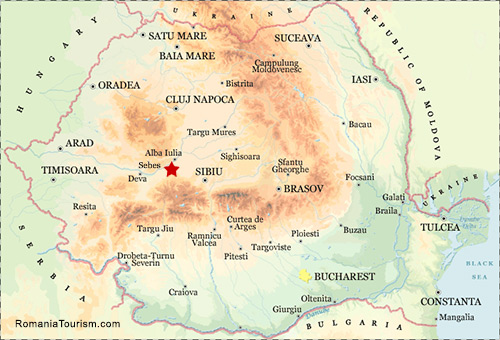
Location: Central Romania, Alba County
Size: 2.5 sq. miles (6.3 sq. kilometers)
Elevation: 820 ft. (250 meters)
Population: 29,475
First documented: 1245 AD (Sacerdos de Malembach)
Town of Sebes Info
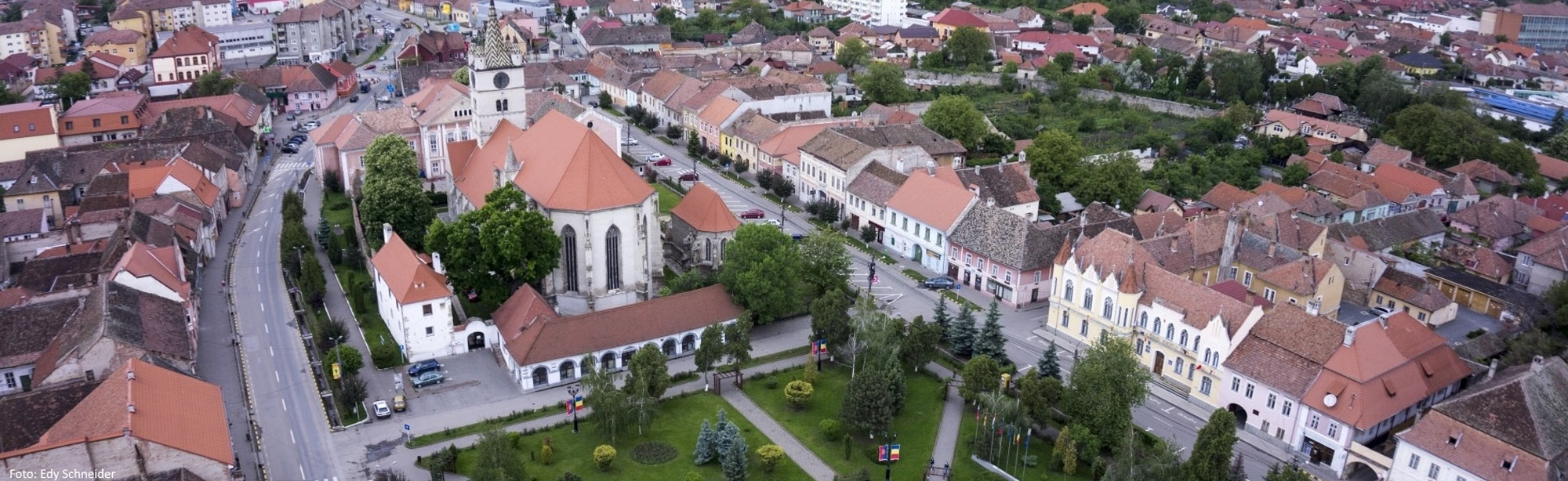
Originally a Dacian settlement, later incorporated into the Roman Empire, Sebes (Mühlbach in German), was settled by the Saxons immigrants, in the 12th century. First documented in 1245, Sebes flourished economically and politically during the middle ages, serving as an administrative town for the region for more than five centuries between 1308 and 1876.
The Transylvanian Diet met in Sebes in 1546, 1556, 1598 and 1600 at the Zapolya House, now Town of Sebes Museum.
The town's name comes from the word sebes, meaning 'fast', and refers to the river that flows through the town. The German name Mühlbach stands for 'mill river' and refers to the hydraulic mills that were built along the river.
A renowned craft and trade center, Sebes was home to some 19 guilds – among them the armor-makers, tailors, blacksmiths, furriers, shoemakers, bakers, potters and drapers – which conducted business with the province of Walachia, as well as with central and western European cities. The downtown area of present-day Sebes, lined with colorful high-roofed 18th and 19th century Transylvanian houses, has preserved its medieval feel.
Landmarks
Sebes Evangelical Church
Biserica Evanghelica Sebes
Open: Mon. – Sun. 9 a.m. – 5 p.m.
Admission charge
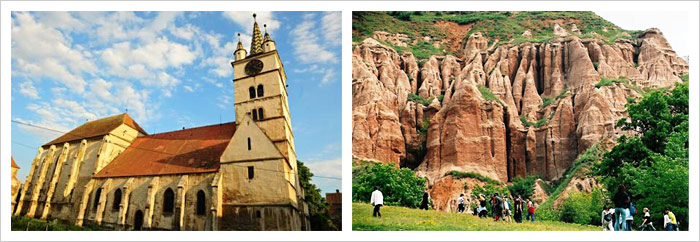
First built as a Roman Basilica, in romanesque style, the church later took on a gothic appearance with renaissance elements. Only the nave has been preserved from of the original church built between 1240 and 1270. Throughout the centuries, gothic elements were added to the structure, such as the richly decorated choir built between 1361 and 1382. The Evangelical Church in Sebes boasts the largest altar of all churches in Transylvania. Richly decorated with paintings and carvings, the polychrome wooden altar was designed between 1518 and 1526, marking the transition from gothic to renaissance style.
The church was repainted in 1752 and again, in 1904. In the late 18th century, an organ made by Master Johannes Hahn of Sibiu was placed below the belfry. In 1893, it was replaced by a new organ made by the brothers Rieger of Jagendorf (Silesia).
St Jacob's chapel, on the north side of the church, was built in gothic style in the 14th century. Images depicting the lives of St Francis of Assisi and St Nicholas are still visible on the murals.
Tailors' Tower is also known as the Student's Tower. Legend has it that when a Turkish army attacked the town in 1483, a couple of the locals refused to surrender and barricaded themselves in one of the towers of the citadel, namely the Tailors' Tower. The Turks conquered the tower and burned it down.
The only survivor was a 16-year-old boy, a student at the German school in Sebes. Taken prisoner by the Turks, he managed to escape after 22 years of imprisonment and fled to Rome where, in 1475, he wrote a book in Latin entitled About the Turks' Religion, Manners and Evil Deeds.
The work was signed The Nameless One of Sebes. The book enjoyed tremendous success throughout Europe, being printed in no less than 25 editions until 1600. The 1530 edition was prefaced by Martin Luther himself.
Cetatea Sebesului
The first written mention of the Sebes Fortress dates back to 1387 when construction began. Damaged by invaders, it was restored in 1571. Stone-block and brick walls with eight towers were added to the original rectangular precinct. The one-mile-long walls with battlements, ramparts and openings (used to pour hot tar over assailants) have been preserved and can be seen even today.
Turnul Croitorilor or Turnul Elevilor
Town of Sebes was surrounded by thik walls guarded by eight towers, built by Sebes'guilds. Only four towers remain standing to this day: Shoemakers', Tailors' , the Octogonal and the Semi-Circular.
Other Sebes historic landmarks include: Guillds'House (Halele Breslelor), Binder House, Roth House, Filtsch House, Weber House and the Roman-Catholic Monastery St. Bartholomew.
...
Sebes Museums
Town of Sebes Municipal MuseumMuzeul Municipal „Ioan Raica” - Sebeș
Address: Str. Mihai Viteazu 4
Telephone: (+4) 0258 735.240
Website
Admission charge
Housed in Zapolya House - a structure built in the second half of the 15th century - Sebes Municipal Museum exhibits a rich collection of Romanian and Saxon folk art, medieval weapons, traditionalpottery and icons painted on glass and wood. During the 16th and 17th centuries, Zapolya House served as the seat of the Transylvania Diet - the legislative, administrative and judicial body of the Principality of Transylvania (between 1570 and 1867).
Attractions near Sebes
Town of Alba Iulia Location: 10 miles north of Sebes
Access: car, bus, train
The capital of Alba county, Alba Iulia is the home of the very well preserved Vauban Fortress Alba Carolina
Alba Iulia more info
Cetatea Calnic - UNESCO World Heritage Site
Location: 10 miles southeast of Sebes
Access: car
Built in 13th century, Calnic Fortified Church is one of the most representative defensive structures in Transylvania. The Siegfried tower, the landmark of the fortress, is five stories high and is endowed with defensive corridors and firing windows. An onsite medieval art museum displays various artifacts.
Calnic Fortress more info
Location: 38 miles east of Sebes
Access: car, bus, train
Sibiu is one of the most beautiful towns in southern Transylvania and the cultural capital of the region.
Sibiu more info
Trip Planning Info
Transportation
Air transport to SebesNearest airports to Sebes:
Sibiu (SBZ) - 40 miles southeast
Cluj Napoca (CLJ) - 75 miles north
Targu Mures (TGM) (CLJ) - 85 miles northeast
Sebes Alba train station
Gara Sebes Alba
Address: Str. Garii
(0.6 miles east of town centre)
Telephone: 021 9521
Daily train connections from/to several Romanian cities, including Bucharest, Alba Iulia, Arad, Brasov, Sibiu, Sighisoara, Targu Mures and Timisoara.
To check train schedules for domestic routes, please visit Romania Tourism
domestic transportation section.
Sebes Bus Stations
Autogara Sebes
Address: Strada Garii 53
Telephone: (+4) 0358 401.741
Bus schedules
Autogara VolTrans
Address: Strada Vanatori 24
Telephone: (+4) 0358 401.741
...
Sebes Taxi| Sebes Taxi Companies | |
|---|---|
| Name | Phone # |
| Pronto Taxi | (+4) 0745 640.427 |
| Euro Taxi | (+4) 0744 205.792 |
| Max Taxi Radio | (+4) 0747 940.940 |
| Cata Taxi | (+4) 0748 865.215 |
...
Travel to/from Sebes by car:Highway 1 (A1) connects Sebes with western Romania (city of Timisoara) via Deva -- Lugoj.
The fastest way to Bucharest, Romania's capital city, is via Sibiu (A1) -- Pitesti (Olt River Valey scenic Road).
| Road Distance from/to Sebes: | |
|---|---|
| City | Distance |
| Bucharest | 205 miles |
| Arad | 140 miles |
| Brasov | 125 miles |
| Budapest (Hungary) | 310 miles |
| Cluj-Napoca | 75 miles |
| Constanta | 375 miles |
| Iasi | 290 miles |
| Oradea | 165 miles |
| Sibiu | 40 miles |
| Sighetu Marmatiei | 185 miles |
| Sighisoara | 75 miles |
| Suceava | 250 miles |
| Targu Mures | 95 miles |
| Timisoara | 135 miles |
| Vienna (Austria) | 460 miles |
...
Sebes Accommodations
Accommodations in Sebes include:
| Hotel Name | Class | Location |
|---|---|---|
| Leul de Aur | four-star / midscale | Sebes Town Centre |
| Karlhof | four-star / midscale | 0.4 miles south of Sebes Town Centre |
| Clasic | three-star / midscale | 0.8 miles east of Sebes Town Centre |
| Hotel Turn | three-star / midscale | Sebes Town Centre |
| Pensiunea Faur | three-star / midscale | 3.2 miles south of Sebes Town Centre |
| Pensiunea Ryn | three-star / midscale | 0.8 miles west of Sebes Town Centre |
| Allegria | three-star / midscale | 5.4 miles north of Sebes Town Centre |
| Golf Hotel | four-star / midscale | 12 miles southwest of Sebes Town Centre |
| Cardinal | three-star / midscale | 6.5 miles northwest of Sebes Town Centre |
| Axa | three-star / midscale | 9 miles east of Sebes Town Centre / off Highway 1 |
| Casa Dives | three-star / midscale | 12 miles southwest of Sebes Town Centre |
...
Sebes Local AuthoritiesSebes Town Hall
Primaria Sebes
Address: Piata Primariei 1
Telephone: (+4) 0258 731.318
PrimariaSebes.ro
Sebes Post Office
Oficiul Postal Sebes
Address: Str. Valea Frumoasa 2
Telephone: (+4) 0258 732.711
The post office signs display the word POSTA.
Telephoning Sebes from Abroad
International Access Code + 40 (country code) + 258 or 358 (area code) + six-digit telephone number
...
Sebes Health and EmergencyGeneral emergency phone #: 112 (Police, ambulance, fire fighters
Sebes Municipal Hospital
Spitalul Municipal Sebes
Address: Strada Șurianu 41
Telephone: (+4) 0258 731.712
SpitalulSebes.ro
Sebes Maps
Map of Romania Historical Regions
Town of Sebes interactive Street Map (Harta Interactiva Sebes)
Romania - Detailed Map
Sebes region Map