
...
Alba Iulia Fast Facts
Name: Alba Iulia (pronounced al.ba you.li.a )
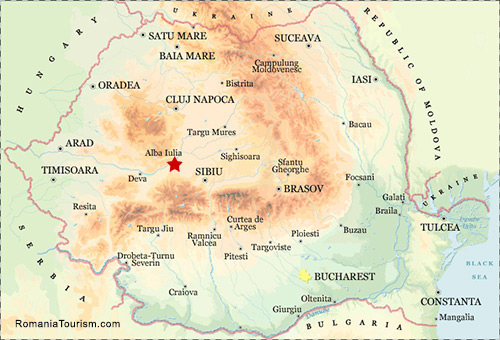
Location: Transylvania - Central Romania
Nearest airports: Sibiu and Cluj Napoca
Area: 3.7 sq. miles (9.7 sq. kilometers)
Elevation: 710 - 790 ft. (222 - 247 meters)
Population: 63,000
First documented: 1097 AD
...
Alba Iulia General Information
The gentle climate and the richness of the soil made the area around Alba Iulia inhabitable since ancient times
and established Alba as a leading wine growing region since 1st century AD. Northwest of Alba Iulia are the Apuseni Mountains
and in the east the Transylvanian Plateau with its rolling hills and deep, wide valleys.
One of the oldest settlements in Romania, known in ancient time as Apulum,
Alba Iulia became the capital of Roman Dacia and the largest military and economic center, during the Roman occupation.
Temples, mosaics, thermae and statues, amphitheaters, the governor's palace "Daciarum Trium" –
all rendered the original Dacian Apulul as the miniature copy of the mother Rome.
During the ROman ocupation Alba Iulia (Apulum) became so wealthy that it was nicknamed 'Chrysopolis' ('City of Gold').
Alba Iulia remained a strong long after the Roman retreat from Dacia.
Alba Iulia reached its peak between 1541-1711, serving as the capital of the independent Principality of Transylvania
and the residence of the Transylvanian princes.
In 1599, Prince Mihai Viteazul (Michael the Brave) achieved, for a brief period of time, the union of the three main provinces of Romania:
Walachia, Transylvania, and Moldavia and Alba Iulia became the capital of the United Romanian Principalities.
The town later became an important printing centre and an episcopal diocese.
Nowadays the local universities continue the tradition of the old academic schools.
The peasant revolt led by Horea (Vasile Nicola Ursu), Closca (Ion Oargă) and Crisan (Marcu Giurgiu),
- executed on February 28, 1785 on Dealul Furcii (the Pitchfork Hill) -
turned the town of Alba Iulia into a symbol of the fight for justice and freedom.
130 years later, on December 1st 1918, the province of Transylvania declared its unification with Romania.
In 1922 Prince Ferdinand was crowned King of Romania in an act which mirrored the union achieved more than three centuries earlier by Prince Mihai Viteazul.
Iulia comes from the name of Romanian Prince Gelu (Iulius in Latin) who ruled over the land around Alba Iulia during the 10th century. The Habsburgs tried to impose the name Alba Carolina (Karlsburg) in honor of the emperor Charles VI. In 1918 the town became once again Alba Iulia.
In Alba Iulia Old Town visitors can stroll along the wide, tree-lined streets of the Habsburg citadel, one of the most impressive in Europe, to discover the historical, cultural and architectural places of interest of Alba Iulia: the Roman Catholic Cathedral – the oldest and most valuable monument of architecture in Transylvania, the Batthyaneum Library, the Orthodox Cathedral of the Reunification, the Babilon Building – housing the National Museum of Unification, the Union Hall, the Apor Palace, the Princely Palace, and the University of Alba Iulia.
...
Alba Iulia Sights and Landmarks
Alba Iulia Vauban Fortress
Cetatea Alba Iulia
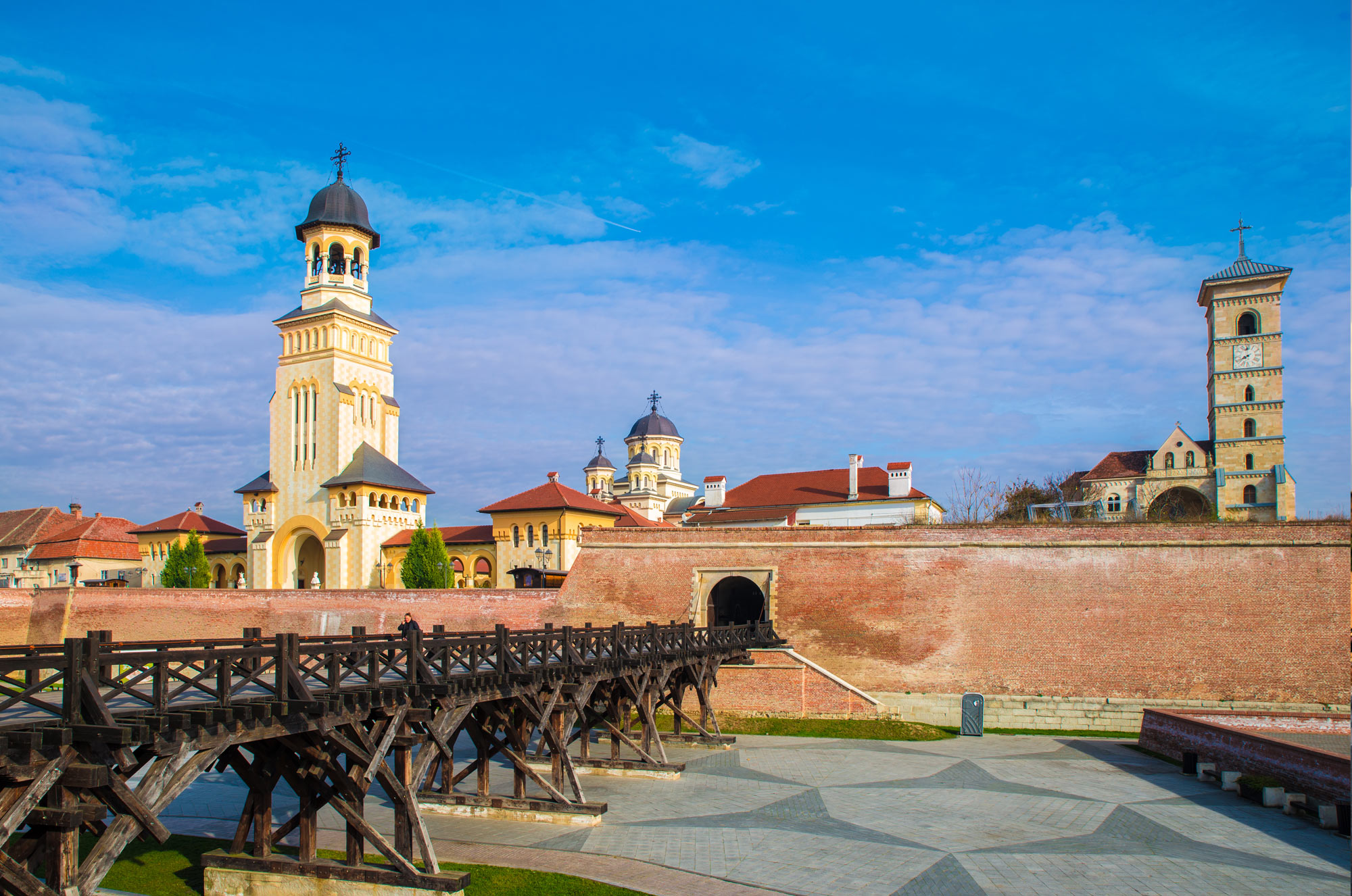
The plans of Alba Iulia fortress - inspired by Vauban military architectural systems -
were drawn by Italian architect Giovanni Morando Visconti.
Completed in 1735, is the largest of this kind in Southeastern Europe.

The fortress is outstanding both for its architectural elements and for the beauty of its six gates,
unique in European military structures. Doubtless the artists, sculptors Johann Koning, Johan Vischer and Giuseppe Tencalla,
had been inspired by ancient mythology.
About 7.2 miles of ramparts made of brick and quarry stones form a seven-point star shape with seven bastions
(Eugene of Savoia, St. Stephen, The Trinity, St. Michael, St. Carol, St. Capistrano and St. Elisabeth)
guarded by six monumental gates - wornderful examples of early baroque - a style that characterizes the 18th century Transylvanian architecture.
Palatul Princiar
The Princely Palace, built in the 16th century, was Prince Mihai Viteazul's residence during the first political unification of Romanians in the 1600s.
Following Ottoman and Tatar invasions the palace was destroyed. During the rule of princes Gábor Bethlen and George II Rakoczi
the palace was restored but not to its previous condition. From 1700 on, the building was used as military barracks.
Opposite the palace the Union Hall (Sala Unirii) is the room where where the unification act between
kingdom of Romania and Transylvania was signed, during the Great National Assembly meeting of December 1st 1918.

Biblioteca Batthyaneum
In 1792, the Romano-Catolic bishop of Transylvania - Ignatius Batthyán
transformed a former Trinitarian church into an astronomy institute:
Specula Batthyaniana Albensis (or Institutum Astronomicum seu Astronomiam) - Institute of Theoretical and Practical Astronomy.
18 years later, in 1789, Batthyaneum Library was fouded.
It is known all over the world for its rare manuscripts - over 60,000 documents -
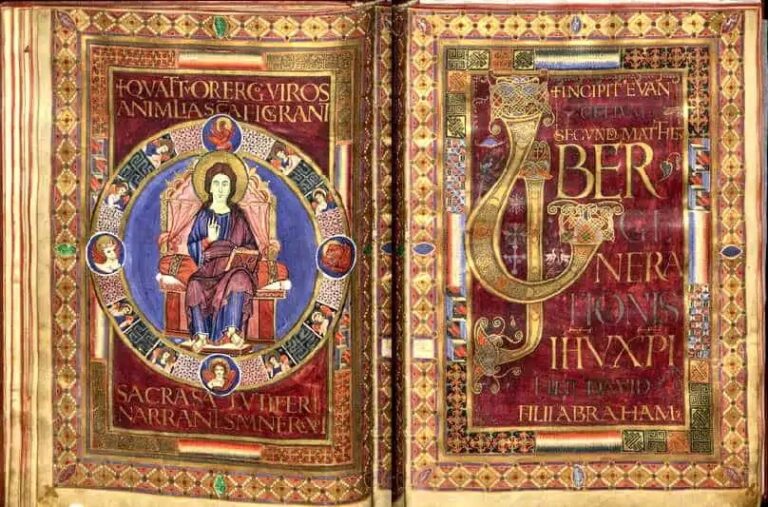
including the Codex Aureus (year 810) - also known as the Lorsch Gospel,
Biblia Sacra (13th century), Codex Burgundus (15th century), David's Psalms,
the New Testament of Balgrad (1648), the Pentateuch of Orăştie (1850), Şerban Cantacuzino's Bible and many more.
The most representative room of the library, Aula Magna, preserves the late 18th and early 19th century
layout in the Austrian "Zopf" style, a mixture of Neoclassicism and Rococo.
The manuscript, written entirely in gold ink, is known for the exceptional quality of its ornamentation (miniatures, initials and borders). It is not known when and how the Codex / Carolingian manuscript was split in two. The other half of the manuscript, the Gospels of Luke and John, are in the Vatican and covers 1 and 4, which are worked in ivory plates, are at Victoria and Albert Museum in London respectively at Vatican Museum. Codex Aureus of Lorsch found in Batthyaneum Library collection, contains 111 pages decorated with polychrome friezes, 12 pages of illustrated biblical canons, 3 pages illustrated with paintings - two of which depict portraits of the evangelists Matthew and Mark - and two other pages with ornamental writing.
The Codex Aureus is part of the UNESCO Memory of the World Register.
Palatul Apor
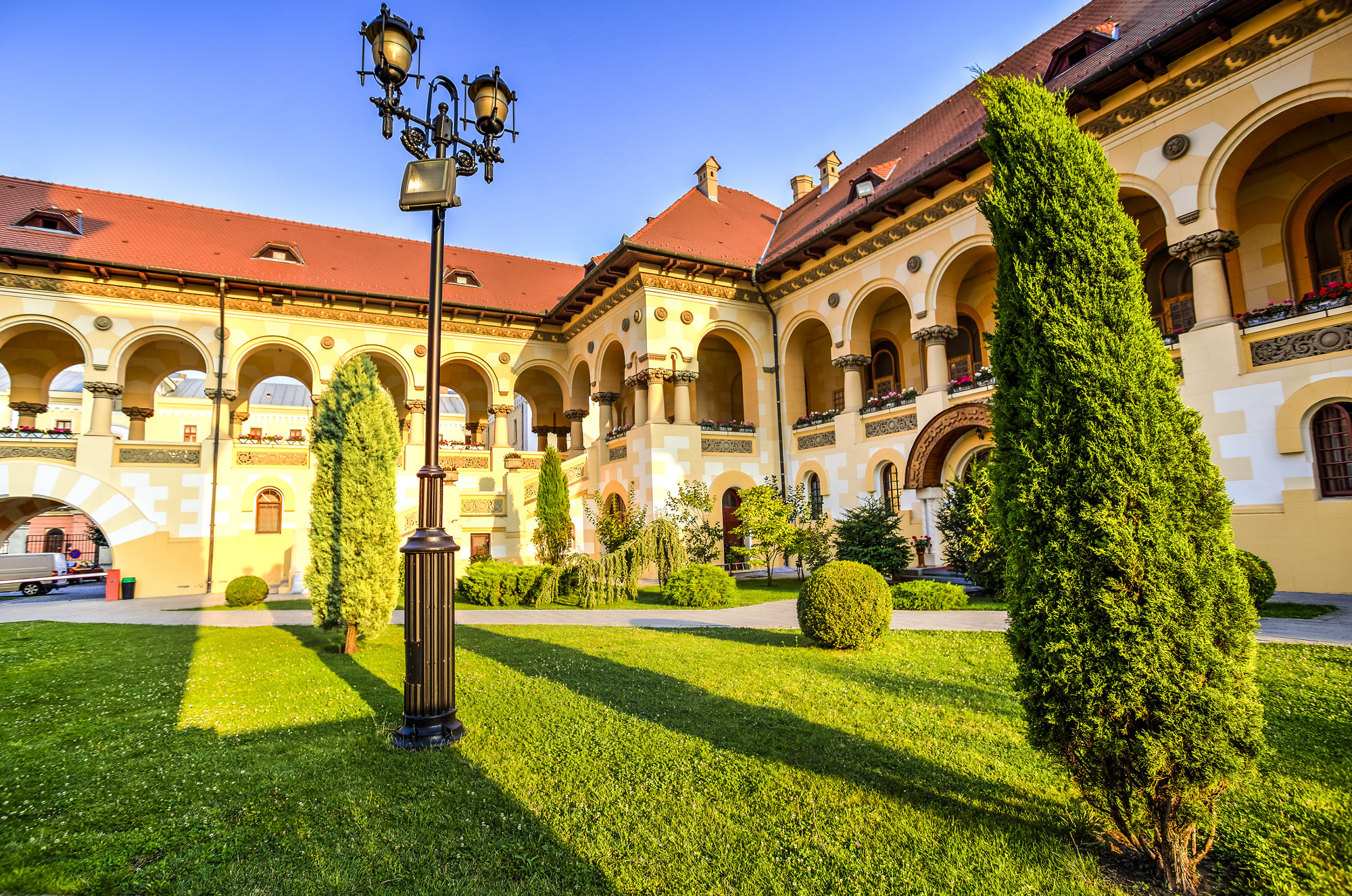
Apor Palace is located nearby the Bathyaneum Library.
Built in the second half of the 17th century, it served as the residence of Prince Apor,
and at the beginning of the 18th century as that of Austrian army leader, Prince Steinville.
Historic Churches
Orthodox Cathedral of the ReunificationCatedrala Arhiepiscopală Alba Iulia
Address: Str. Mihai Viteazu 21
Open: Mon – Sun 8 a.m. – 7 p.m.
Located near the western entrance of the citadel,
the impressive Orthodox Cathedral was built between 1921 and 1923 to celebrate Transylvania's reunification with Romania.
The first monarchs of unified Romania, King Ferdinand I and Queen Marie were crowned there on 15 October 1922.

Catedrala Romano-Catolica
Address: Str. Mihai Viteazu 21
Telephone: (+4) 0258 811.689
Alba Iulia Roman-Catholic Cathedral was built in the 13th century on the site of a Romanesque church destroyed during the Tartar invasion of 1241.
This place or worship features one of the most impressive early Renaissance interiors in Transylvania.
The light coming in from the Gothic windows helps create inside an ethereal atmosphere.
The tomb of Prince Iancu (Ioan) de Hunedoara (Ioannes Corvinus),
Voivode of Transylvania (c.1441 – 1446) is located in the cathedral.
...

...
Alba Iulia Museums
National Unification MuseumMuzeul National al Unirii
Address: Str. Mihai Viteazul 12 - 14
Telephone: (+4) 0258 813.300
Open: Tue. – Sun.: 10 a.m. – 7 p.m.
National Museum of Unification, founded in 1887, is housed in Babilon Building a structure originally built, in 1851, for military purposes.
The museum features a pre-history section, Dacian-Roman and feudal sections as well as sections dedicated to the fights against the Ottoman Empire,
the 1848 Revolution (simultaneous republican revolts against European monarchies),
the Unification of the Romanian Principalities of Walachia and Moldavia in 1859,
World War I and the Union of Transylvania with Romania:
On 1 December 1918, 1.228 delegates representing communities from all-over Transylvania declared the union of province/ principate of Transylvania with Romania.
The event took place in the The Unification Hall - the largest - and one of the most spectacular - room in town.
Muzeul Principia
Address: Str. Mihai Viteazul 12 - 14
Telephone: (+4) 0258 813.300
Open: Tue. – Sun.: 10 a.m. – 7 p.m.
A Roman Empire footprint in Transylvania can be seen in Alba Iulia
at the former headquarters of the 13th Legion Gemina in the Roman fort of Apulum (Alba Iulia).
Principia museum (outdoor section) presents artifacts discovered during archaeological research campaigns.
Dioramas, the briefing area and treasure holds as well as remnants of the original hypocaustrum (heating system)
can be seen in the indoor section of the museum.
...

Attractions Near Alba Iulia
Town of Sebes Municipiul Sebes
Location: 9 miles southeast of Alba Iulia
Access: car, bus, train
Biserica Fortificata Calnic
Location: 15 miles southeast of Alba Iulia
Access: car
...
Day Trips from Alba Iulia
Corvin Castle and town of DevaCastelul Corvinilor or Castelul Huniazilor
Location: town of Hunedoara, 54 miles southwest of Alba Iulia
Access: car or bus
One of the most stunning gothic structures in Transylvania,
Corvin Castle features a sumptuous Knights' Hall, the Council Room, a chapel, a spectacular drawbridge,
high buttresses, inner courtyards and over 50 rooms resplendent with medieval art and furniture.
Suggested detours/ stops:
~ Aurel Vlaicu Memorial House, aviation pioneer/ avant-garde aeroplane constructor, inventor and aeroplane pilot.
~ Town of Deva , beautiful and quaint town located 10 miles north of Corvin Castle.
Salina Turda
Where: 42 miles N of Alba Iulia
Access: car, bus
An important salt-mining town, Turda was the seat of the Transylvanian Diet during the 16th century and hence,
one of the wealthiest towns in the region. Walk along the main street lined with grand stone houses and some well-preserved baroque facades.
The Calvinist church and the Roman Catholic Church, both dating from 15th century,
feature impressive gothic architecture.
in 1932 salt extraction in Turda stopped as cheaper salt was available from the nearby town of Ocna Mures,
now also known for its salt baths Băile Sărate Ocna Mureș.
From 1932 and until late 1980's some of Turda salt mine galleries were used for cheese aging and storage.
Today, the mine is home to one of the world's most unique underground amusement parks: Salina Turda.
* One mile east of Turda, visitors can relax at Baile Turda / Durgău Salty Lakes
(two natural heliothermic, salt-water, lakes formed on the site of an old salt mine).
Cramele Jidvei
Location: 35 miles northeast of Alba Iulia
Address: DJ 107, Jidvei
Access: car, bus (to Cetatea de Balta)
Telephone: (+4) 0258 881.881
Located in the Târnava river valley, Transylvania ,
Jidvei Winery is known for its superb dry white wines.
Wine tasting and private events can be arranged at Bethlen Castle
(built in 1624) in Cetatea de Baltă, 5 miles NE of Jidvei Winery.
Municipiul Medias
Location: 50 miles east of Alba Iulia
Charming medieval section, home to impressive fortified evangelical church
Access: car, train
Municipiul Sighisoara
Location: 70 miles northeast of Alba Iulia
Sighișoara is the most authentic and one of the best preseverd medeival citadels in Europe.
Access: car, train
Parcul Natural Apuseni
Location: 60 miles northwest of Alba Iulia
Access: car, train (Huedin station)
Municipiul Sibiu
Location: 45 miles southeast of Alba Iulia
Second-largest town in southern Transylvania, Sibiu is the Cultural Capital of the Region,
home to exquisite museum, wonderful architecture and great restaurants.
Access: car, bus, train
Location: 38 miles southwest of Alba Iulia
Access: car
Dacian Fortresses info
Alba Iulia Trip Planning Info
Alba Iulia Transportation
Air Transportation to Alba IuliaNearest airports to Alba Iulia are:
Sibiu (SBZ) - 44 miles southeast
Cluj Napoca (CLJ) - 62 miles north
Targu Mures (TGM) - 75 miles northeast
The shortest route from Bucharest to Alba Iulia is:
Bucharest – Pitesti – Ramnicu Valcea – Sibiu – Alba Iulia (E81 / A1)
The fastest route from Budapest (Hungary) to Alba Iulia is:
Budapest – Debrecen – Bors – Oradea – Alba Iulia (E60)
| Distance from Alba Iulia to: | |
|---|---|
| City | Distance (Miles) |
| Bucharest | 215 |
| Arad | 149 |
| Baia Mare | 146 |
| Belgrade (Serbia) | 231 |
| Brasov | 135 |
| Budapest (Hungary) | 319 |
| Constanta | 350 |
| Iasi | 282 |
| Oradea | 126 |
| Satu Mare | 150 |
| Sibiu | 45 |
| Sighetu Marmatiei | 175 |
| Sighisoara | 71 |
| Suceava | 241 |
| Timisoara | 146 |
| Tulcea | 338 |
| Vienna (Austria) | 471 |
...
Train travel to Alba Iulia
Alba Iulia train station
Gara Alba Iulia
Address: Bd. Ferdinand
Telephone: (+4) 0258 812.967
Alba Iulia railway station is located one mile southeast of Alba Iulia Citadel.
There are a few direct trains from Romania's main cities to Alba Iulia;
most international and domestic express trains stop in Teius (10 miles north).
For a list of international trains with service to/from Romania please visit
RomaniaTourism International Transportation section
| Train Travel Time from Alba Iulia to: | |
|---|---|
| City | Travel Time |
| Bucharest | 7 hours 30 min. |
| Arad | 3 hours |
| Brasov | 5 hours |
| Cluj Napoca | 2 hours 30 min. |
| Iasi | 11 hours 30 min |
| Sighisoara | 2 hours 50 min. |
| Suceava | 9 hours 30 min. |
| Timisoara | 4 hours |
To check train and bus schedules for domestic routes please visit RomaniaTourism domestic transportation section.
Alba Iulia Bus Station
Autogara STP Alba Iulia
Address: Str. Iasilor 94
Telephone: (+4) 0258 812.967
Daily domestic bus service from/to: Apoldu de Sus, Baia Mare, Beclean, Bistrita, Bucharest, Calimanesti, Carei, Cluj Napoca,
Deva, Hateg, Miercurea Sibiului, Orastie, Prundu Burgaului, Ramnicu Valcea, Satu Mare, Sebes, Sibiu, Targu Jiu, Teius, Timisoara, Turda
Several bus (autobuz) routes connect Alba Iulia's main areas and tourist attractions.
Alba Iulia Transport Authority (Societatea de Transport Public Alba Iulia
operates seven city bus routes.
| Taxi company | Phone # |
|---|---|
| Ace Taxi | 0258 946 |
| Comfort | 0258 944 |
| City Taxi | 0258 948 |
| Exclusiv Taxi | 0258 941 |
| Florea Taxi | 0258 945 |
| Nova Taxi | 0258 942 |
| Unic Taxi | 0258 949 |
...Alba Iulia Car Rental
Get great Alba Iulia car rental deals.
Cappopera
Telephone: (+4) 0744 535.825
Savian
Telephone: (+4) 0755 802.813
...
Alba Iulia Hotels
Accommodations in Alba Iulia include:
| Hotel Name | Class | Location |
|---|---|---|
| One Hotel | four-star / upscale | Alba Iulia Town Centre |
| Aura Unirii | boutique / mid-scale | Alba Iulia Town Centre |
| Transilvania | four-star / midscale | Alba Iulia Town Centre |
| Teodora Golf Club | four-star / upscale | 4.5 miles east of Alba Iulia Town Centre |
| Mariss | three-star / midscale | one mile south of Alba Iulia Town Centre |
| Cetate Imparatul Romanilor | three-star / midscale | Alba Iulia Town Centre |
| Cardinal | four-star / midscale | 8 miles south of Alba Iulia Town Centre |
| Allegria | three-star / midscale | four miles north of Alba Iulia Town Centre |
| Hermes | three-star / midscale | one mile north of Alba Iulia Town Centre |
...
Alba Iulia Tourist Information
Alba Iulia Tourist Information Centre
(Centrul de Informare și Promovare Turistică)
Str. Militari 4
Telephone: (+4) 0371 337.148
E-mail
Alba Iulia Virtual tour
...
Alba Iulia Health and Emergencies
General Emergency phone number: 112
(Ambulance, Police, Firefighter)
Alba Iulia pharmacies (Farmacie) open non-stop:
Farmacia Dona
Address: Bulevardul Revoluției 1989 nr . 25 B
Farmacia Remedia
Address: Str. Iuliu Maniu, Bl.280
Farmacia Sic Volo
Address: Bulevardul 1 Decembrie 1918 nr. 11
Open: 7 a.m. - mid-night
Emergency Hospital
Spitalul Judetean de Urgenta Alba Iulia
Address: Bd. Revolutiei 1989, Nr. 23
Telephone: (+4) 0258 820.825
...
Alba Iulia Local Authorities
Archives of Alba County
Directia Judeteana Alba a Arhivelor Nationale
Address: Str. Mihai Viteazul 29,
Telephone: (+4) 0258 810.996
E-mail
Alba Iulia Town Hall
Primaria Alba Iulia
Address: Calea Motilor 5 A
Telephone: (+4) 0258 819.462
Alba Iulia Consumer Protection Agency
Oficiul pentru Protectia Consumatorilor – Alba (ANPC)
Address: Bd. Octavian Goga 9
Telephone: (+4) 0258 811.946
E-mail
Telephoning Alba Iulia from Abroad
International Access Code + 40 (country code) + 258 or 358 (area code) + six-digit telephone number
...
Alba Iulia Maps
- Romania Physical Map (Romania - Harta Fizica)- Town of Alba Iulia interactive map (Alba Iulia - Harta Interactiva)
- Romania Map of Main Tourist Attractions (Romania - Harta Atractiilor Turistice)
- Romania Main Roads Map (Romania - Harta Drumurilor Principale)
- Romania Railways Map (Romania - Harta Cailor Ferate)